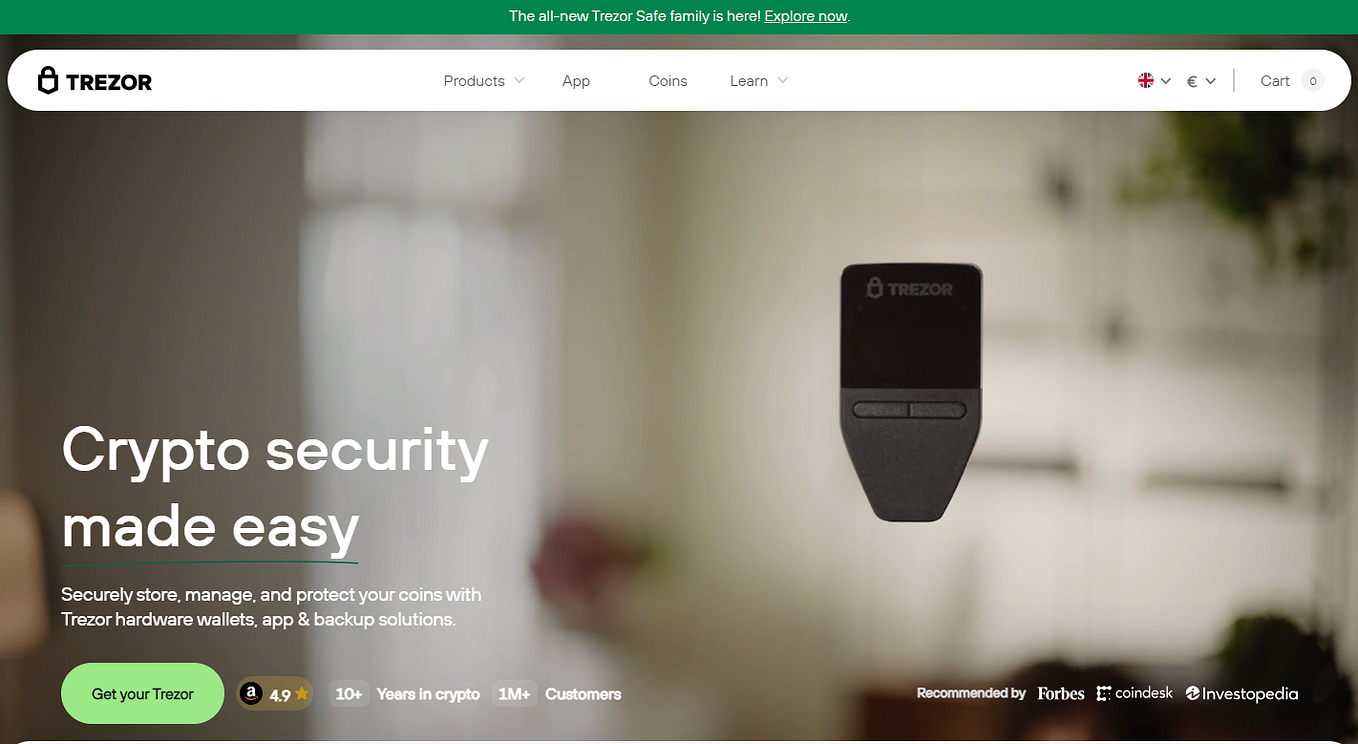
When it comes to securing your cryptocurrency and digital assets, keeping full control of your private keys is essential. A hardware wallet like Trezor offers an industry‑leading, offline solution to protect your crypto from hackers, malware, and phishing scams. But before you can start using your Trezor device — whether it’s a Trezor One or Trezor Model T — you need to go through the official setup process. That’s where Trezor.io/Start comes in. This page is the official onboarding gateway provided by Trezor to help users safely initialize their device and begin managing their cryptocurrencies with confidence.
In this guide, we’ll walk you through why Trezor.io/Start is important, what it does, and how to complete the setup step‑by‑step — including critical security practices you must follow to keep your crypto truly safe.
At its core, Trezor.io/Start is the official setup and onboarding page for Trezor hardware wallets. It’s the first place you should visit after unboxing your Trezor device, and it serves as a secure launchpad for the entire configuration process. The page provides verified download links for the official software, step‑by‑step setup instructions, and security guidance designed by the creators of Trezor themselves. This helps eliminate confusion and, most importantly, protects users from fake websites and malicious downloads that could compromise their private keys.
Because private keys give access to your crypto, you never want to setup your wallet through unofficial sites or random online tutorials; phishing scams are prevalent in the crypto world, and using only the official Trezor setup flow is critical.
Before visiting Trezor.io/Start, make sure you’re prepared with the right equipment and environment:
Open your web browser and go to:
https://trezor.io/start
Make sure the URL is correct and that your connection is secure (look for the padlock icon in your browser). Bookmark this page for future reference so you don’t accidentally use an incorrect or fake domain.
On the start page, you’ll be asked to choose your device type — either Trezor Model One or Model T. Each model has its own specific setup flow, but the overall process is similar.
Trezor Suite is the official desktop application used to manage your wallet — including viewing balances, sending/receiving crypto, updating firmware, and more. You’ll be prompted to download Trezor Suite for your operating system (Windows, macOS, or Linux). Once downloaded, install and launch the application.
Important: Only install Trezor Suite from the official link provided at Trezor.io/Start. Never download wallet software from unknown sources.
Use the USB cable to connect your Trezor to your computer. Once connected, Trezor Suite will automatically detect your device and display setup options.
Brand‑new Trezor devices usually ship without firmware installed for security reasons. The setup process will prompt you to install the latest official firmware, which is cryptographically verified and ensures your device hasn’t been tampered with. Always install firmware through the official Trezor Suite — never from external sites or tools.
You’ll be given two choices:
If you create a new wallet, the device generates a recovery seed phrase (usually 12, 18, or 24 words). This phrase is the only backup of your private keys — if you lose it, you lose access to your crypto forever. Write the words down in order on the provided recovery card and store them offline.
After writing down your seed phrase, the device will ask you to confirm it. This ensures you’ve recorded it correctly. Never take photos of your seed, save it to a digital file, or share it with anyone — digital backups can be hacked.
Choose a strong PIN to protect access to your Trezor. This PIN must be entered each time the device is connected. It shields your wallet from unauthorized physical access.
Once setup is complete, you can add accounts within Trezor Suite for various cryptocurrencies — Bitcoin, Ethereum, LTC, and many more. You’ll now be able to send, receive, and track your assets securely.
Using Trezor.io/Start ensures your setup process is secure, legitimate, and verified. It prevents:
In an ecosystem where private keys mean ownership, this official setup flow gives you peace of mind and full control of your digital assets.